Showing posts with label agriculture. Show all posts

service project ~ creating beauty in the community

 it took weeks of practicing consultation to make a decision and plan a service project, but finally the 'gems of justice' group agreed on creating a flower garden along a public pathway near my home.

they first went and got permission from the neighbor along whose wall it touches.  she was happy to have the weeds gone and some plants growing against her compound wall.

weeding and clearing out rocks & other debris
they came back and wrote down the materials they would need -- i explained to them that i had extra chicken fertilizer and cow manure that they could use to enrich the soil.  they agreed that each member would contribute what they could afford to create a fund to buy the plants.  one member said that he wouldn't be able to offer any money and they all supported him, saying that it was ok.

when most of the jr. youth were on school holiday, we spent a couple of hours clearing the land, mixing in chicken fertilizer and cow manure, and carrying cement blocks to form a barrier around it.

mixing in fertilizer & manure
the next morning we drove to a plant nursery with their money and talked about the principles of consultation before they walked around to choose the plants.  they understood that it was most important to listen to everyone's ideas and to find agreement before deciding which plants to choose.  i stayed in the car while they worked together -- they were thinking about cost as well as the type of plant, whether it would grow to be a bush or a tall and slender plant, etc.

filling up water at my house to carry to the garden
they returned to the car very happy that they had purchased 6 very diverse plants with their very own money (which was a small amount).  they suggested coming back later to plant them since the sun was very hot by the time we were finished shopping for the plants.  the heavy rains came so a few days passed until 4 of them returned to arrange the plants in the garden.  this part of the project was the most fun -- loosening the packed soil, digging holes, arranging the plants, watering them & covering them with some fertilizer.
almost done; enjoying how the garden looks
applying chicken fertilizer after watering the plants
they learned a lot about how to create a healthy garden for plants, as well as how to value each person's contribution in the process of applying skills and making decisions.  they needed some spiritual guidance along the pathway of learning but truly mined their own gems in making this service project a success!

joy!
friendship growing through working together :)

growing seedlings from egg cartons

about a month ago i brought a pile of used cardboard egg cartons to my neighbor, Monica's, home with a bag of seeds.  some jr. youth had brought a large bag of rich soil for us to use.  we started sprinkling soil and a seed into each egg holder and by the time we were done, we had made about 10 cartons' worth of seeds.

the benefit of growing them first in the egg cartons is to prevent the possibility of chickens coming and eating the seeds out of the garden before they have sprouted.  the family kept the cartons in a sunny area where the chickens couldn't fly to them; they also chose a place very close to where they hang out so when the rain came suddenly, they were able to quickly manage bringing them into shelter.

Monica's family took on the responsibility of caring for the seeds.  they watered them daily and within 2 weeks they had begun the process of transplanting the seedlings into their own keyhole garden which was made by Emil and Magdelene, ages 12 and 10 respectively.  it isn't a true keyhole garden but they tried their best and it is serving, for the first time in their family, as a formal garden dedicated to growing food.  it is simply beautiful.  the seedlings have taken root and are thriving now in Ghana's rainy season..
adjacent keyhole gardens made by Emil and Magdelene
Monica tilling the garden and removing weeds; beans plants are growing in the foreground
tomato seedlings growing in a cluster; the kids will transplant them to the completed keyhole garden across the road
Monica decided to replant some of the carrots i gave her to see if they'll grow bigger

building a keyhole garden ~ service project

the first step in establishing the foundation
this past saturday i went outside early to prepare the land for building the keyhole garden.  this required leveling the land with a shovel and trowel, and then laying down the rusty, metal pipes in a circular pattern wide enough to encompass an inner circle which will serve as the compost pile.  after 45 minutes i was already full of sweat and ready to come home to rest until the time was set to begin with the kids.

i came at 10am as we had planned and began arranging rocks and cement blocks that we have been collecting from within this family's compound area.  since they live where a big home has started being constructed, there were enough to form a low wall for the garden.  cement is not ideal because it erodes rather quickly in this climate, but we wanted to use what we have available to us without waiting a long time to have enough money to purchase proper rocks or bricks.  soon 2 of the 'gems of justice' boys came.  i was so happy to see them because they were willing and able to work hard.
the triangular area will be the entrance to the central compost area
this was the beginning of a 5 hour project that i could not have done without them.  we laid the rocks in a circle along the perimeter of the poles until it was as round as we could make it, with a triangular entrance area to be able to reach into the compost pile in the middle.

we didn't have enough good-sized and shaped rocks to make a higher wall so we managed to integrate smaller ones to create a semi-high wall that was about the same height all the way around.    it took a long time to match them well enough that they fit together well and would enable other rocks to be places above them securely.  this stage was labor intensive and required some level of engineering skills to complete. :)

it was then time to dig a circle in the middle of the garden for the poles to stand around.  at first we used a basic hoe and then we went to ask my gardener for a pick-axe to make deep holes which worked a lot better.  the pick-axe was also essential for breaking up a mound of hardened dirt which we needed to remove so the walkway around the garden would be flat.  the kids ended up digging a hole out of the raised ground and finding better quality soil to add into the garden.  the dirt that was on top was used to fill up the hole and now it is nice and flat!
trying to dig a circular trench in which the poles will be standing
beginning to secure the poles into their positions, using rocks to hammer them down
joshua placing small rocks around the base of each pole (domani's idea) :)
 as the older kids started hammering the poles into place in the middle of the garden, the younger ones gathered small rocks to place around the base of each pole.  it was incredibly sweet the way they worked together and gently, with the utmost care, placed each little rock -- as if now the pole would not fall over. :)


once the poles were secured, one of the boys began twisting twine around them from the base upwards.  the other jr. youth started emptying out the bags of chicken fertilizer and cow manure and mixed them up with the soil that we had.   it was now time to add the layers of ash, rusty metal, cardboard and plants into the garden with the soil.  it was a very enjoyable part of the process because everyone was doing something at the same time.  by this time 3 girls came who are part of another jr. youth group a few blocks away.  they observed for awhile and then started helping.

we included cardboard in our layers because we didn't have straw or dried grasses

trying to knit the long grasses around the poles and twine
  we soon realized that the middle circle would either need a LOT of twine or the grasses they brought needed to be wrapped around the poles.  they were hoping to use the grasses to lie on top of soil to trap moisture.  i asked them if we could use them for the compost pile and if they could continue to bring more because we will need it for both purposes when we are ready to begin planting seeds.  they proceeded to intertwine the long grasses in and out of the poles so they would be secure.  we could see how it was going to look when it can be finished all the way to the top of the poles.
though we were dripping wet, very tired and hungry, the rewards of this service project began to show on our faces as we started to smile with the joy that comes from working hard.
using some better quality soil from where the mound originally stood

using the rake for the final mixing of the soil
we have laid the foundation for the garden but will need to add a lot more soil, ash and grasses before watering and planting seeds.  for our first time making a keyhole garden -- learning from videos from YouTube -- it was an experience that developed many skills and is already making an impact in the lives of the people of the neighborhood.  kids and adults feel excited.  they see it as beautiful.  they tell us they want to see food growing here.  for the jr. youth, it is an immeasurable, indescribable experience that will be something they continue to learn from and enjoy for years to come..

keyhole garden..ready to begin

this is the (blessed!) spot where the neighborhood 'keyhole garden' will be built.  the other day the children and i gathered rocks for the initial layer to make the circle this weekend.  we have gathered a lot of grasses, plant clippings, wood shavings and cardboard.  the kids have been collecting ash from the charcoal they use to cook food, and i decided to use the rusty, metal poles that were for my beans to climb for the keyhole's center circle instead.  we also will use twine to hold them in place since no one has any reeds for tying.  there is probably not enough regular soil, but we have a lot of chicken fertilizer and cow manure to mix into it and create a rich soil to cover the sheet mulching and layers of greens and ash.

the best thing that we have is the interest and enthusiasm of the kids and 2 mamas!  i was so impressed the other day when i came to gather the rocks and weed the area that a group of them came to help without being asked.  almost the entire jr. youth group has now watched the 2 videos of keyhole gardens and are excited about making one.  even my gardener watched them and wants a DVD to show his son so they can make one, too!

starting a keyhole garden in accra

just beyond this home, to the right, will be the keyhole garden

i am at the very beginning stages of making my first keyhole garden with some children, junior youth and their families -- my friends and neighbors.  we are at the early stage of planning and gathering the necessary materials needed to undertake this sustainable agricultural technique.

a keyhole garden in Lesotho

after consulting with the jr. youth and visiting one of the mothers with a video of how the women in Uganda build keyhole gardens, we have chosen a plot of land in our neighbor's lot on the other side of the wall from our compound.   2 of the jr. youth we know live there; their younger brother, who is 10, is one of three children who have started carrying soil in buckets, on their heads, from a big pile a block away.  this pile of soil belongs to my gardener.  since it is extra and he has no use for it, he said we could have it for a small amount of money.  i bought it for gh5 which is about $3.  it will be just enough to fill the garden bed.  the kids will gather large stones and rocks, as well as dried grasses and long sticks.  once they are prepared i will purchase chicken fertilizer and cow manure.  they are going to begin saving the charcoal ash in one location (instead of spreading it out in various locations) and i have some twine to tie around the sticks once we make the inner circle.

the one resource we need, which has always limited people's ability to grow food easily, is water.  these families do not have running water in their homes.  they must collect it from a location down the street.  sometimes water is in short supply and must be saved for washing and cooking.  since i live in a compound with a water storage tank, and since this method requires less water than traditional farming, i will be able to supply the keyhole garden with any additional water that they need.  it can be held in the large plastic containers with a spout that people use for transporting water.

the idea came from Celia Beaumont, a Baha'i who lives in South Africa.  she had seen a post by me on Facebook when i mentioned i was going to start a gardening project with our neighbors.  i started researching about keyhold gardens online and immediately found myself absorbed in the abundant and rewarding benefits of this method for growing food on a small scale (this video link features a keyhole garden in Lesotho).  now i am passionate about making it happen in our neighborhood.  it will be a big learning experience for all of us and one that embodies the full spirit of arising to serve one's community -- demonstrating to the kids and youth how divine confirmation works through consistent and continual effort to achieve one's goals.

..but a tiny seed

i love this little garden.  initially it required a lot of care and patience to prepare it for the seeds.  when we started working on the plot of land, we needed to pull up grass and remove many rocks.  it was full of concrete pieces leftover from the construction of the water container foundation that was built adjacent to it.  the main activity of preparing the soil was taking food scraps from the kitchen and burrying it in the soil.  the kids enjoyed the burrying part the most. :)  i would later mix it up thoroughly, trying to spread it out while constantly removing concrete pieces and more rocks.  it took a lot of work to till the soil and continue working with it until it was ready to plant the seeds.

we had been saving local seeds: tomato, peppers, beans, watermelon & cucumber.  we chose a sprouted potato, too.  after the seeds were planted and the soil was bare, the kids wondered what was happening and how long it would take to see signs of their growth.  this required such patience.  we continued to water the soil, trusting that this was helping give 'birth' to the seedlings.  once they appeared through the soil we were happy and hopeful that this soil would support the growth of more plants.
  
i now wanted to try a little sheet mulching and plant some pea pods above it.  i dug out the soil, put lots of food scraps, covered them with some layers of cardboard, and then replaced the soil over that.  it's not the ultimate way to sheet mulch, but i still like the idea of it decomposing and gradually lending to rich, organic soil.  after the seedlings were growing, i chose another little area of the garden to sheet mulch as well.  i'm already looking forward to when this harvest is finished so we can retill the soil and cover all of the areas with sheet mulching.

the other day was the moment for which the kids had been waiting!  the bean pods were ready to be harvested -- they were jumping with excitement to show me, taking pride in all of the watering and care they had shown the plants in order to bring forth this 'fruit'.  i was so happy for them.  we cooked them that evening but the outer skin was very fibrous so we popped the beans in our mouths and enjoyed them on their own.  without mentioning anything about organic food, i felt in my heart while eating them that this food has the best nutrients and energy because it was grown here..and with that invisible component: love.

the kids in the neighborhood used to water the seedlings until school began.  now that the tutoring is underway and children's classes are beginning, i'll naturally incorporate growing seeds into the activities and lessons.  it is the perfect analogy for life.  we begin as tiny 'seeds'.  we require a lot of care and patience and proper nourishment.  we undergo tests or forces which challenge our development, all of which make us stronger ultimately.  and then we mature and bear forth fruits -- though for us the fruits of life are our children, acquired faith and knowledge, and deeds of servitude to the human race.  i've always enjoyed singing the kids' version of the prayer-song: "I am, O my God, but a tiny seed, which Thou hast sown in the soil of Thy love, and caused to spring forth by the hands of Thy bounty.."  i am constantly striving to educate children to see each other as little plants. :)

"permaculture: a quiet revolution"

i am not a permaculturalist.  but i know it's the solution for the world's ecological, economic and social crises.  it's rooted in honoring and supporting Nature's systems, protecting its particular diversity within each region, channeling its forces, designing our structures and systems based on its principles, conserving vs. wasting energy and money, and creating environments in which food production and sustainable ways of living are enhanced.

there is a short film called, Permaculture: A Quiet Revolution, that is a great way to introduce oneself to the vital necessity of transforming our lives and communities to conform to permaculture principles.  to me it's the most exciting sign of a new world civilization in the making.


girls in the Northern Province of South Africa benefitting from a permaculture project


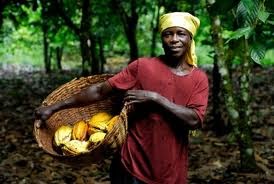
Bittersweet: The cocoa industry

i am learning about the cocoa industry.  while it entices my digestive enzymes for chocolate, the industry in general increases my desire for justice and sustainability because it is dominated by powerful companies, moneymakers and landowners who have very little regard for the farmers who do all the hard work to harvest the cacao beans. 

In addition to the issues of justice for the farmers, it is important, also, to consider the ecological implications for the farmland.  There are challenges for growing cacao trees:
  • It only thrives in climates 20 degrees north and south of the equator;
  • It must be planted next to taller trees whose leaves will protect it from direct sun and high wind;
  • It is susceptible to pests and disease which routinely destroy one-third of the world’s yearly crop.
In addition, the trees are not very productive. Consider:
  • A tree must be five or six years old before it will bear fruit.
  • Each tree bears about 30 usable pods a year, which translates to roughly 1000 beans a year.
  • It takes 500 beans to make 1 pound of bittersweet chocolate – so in the best of circumstances, each tree produces beans for only 2 pounds of chocolate.
Most of us from America and Europe have grown up clueless about this industry.  We have been spoiled with an abundance of opportunities to eat chocolate.  This is true for most of the industries of the world -- we have to go searching to find some rare headline about the injustices and abuses against farmers in the world, or to discover the very difficult procedures and processes that raw materials experience by the hands of these farmers.  For the first time in my life, i am discovering what is involved before a bar of chocolate reaches the market.  What i am learning is that almost all of the millions of farmers (including children) who grow and prepare the cacao beans receive very poor wages for their labor in this lucrative industry.

Fair trade is a relatively new concept but is gradually making strides for a relatively small number of farmers.
Presently, cocoa sold with the Fair Trade label still captures a very low share of the cocoa market (0.1%).
by fair trade agreements there are now stories of individuals feeling empowered and economically secure. The important thing now is for me to change my habit of purchasing chocolate that isn't grown by fair trade.  I enjoy Snickers bars, Reeses peanut butter cups, Duncan Hines brownie mixes, and Nestle's semi-sweet chocolate chips!  I have steered away from the organic chocolate because it is expensive.  But now that i have knowledge, i can make no excuse to justify my purchase of these kinds of products.  I must abstain or admit that i am supporting the industry.  Every soul in this world is loved by God; we are one family.  If one suffers, I suffer.  Essentially there is no separation amongst us....

His Holiness Bahá'u'lláh has given instructions regarding every one of the questions confronting humanity. He has given teachings and instructions with regard to every one of the problems with which man struggles. Among them are (the teachings) concerning the question of economics that all the members of the body politic may enjoy through the working out of this solution the greatest happiness, welfare and comfort without any harm or injury attacking the general order of things. Thereby no difference or dissension will occur. No sedition or contention will take place. This solution is this:


First and foremost is the principle that to all the members of the body politic shall be given the greatest achievements of the world of humanity. Each one shall have the utmost welfare and well-being. To solve this problem we must begin with the farmer; there will we lay a foundation for system and order because the peasant class and the agricultural class exceed other classes in the importance of their service. In every village there must be established a general storehouse which will have a number of revenues.
(Abdu'l-Baha, Foundations of World Unity, p. 39)

Food is making us sick

http://urbansprout.co.za/the_unhealthy_truth_how_our_food_is_making_us_sick

this is such a good article, as are so many on www.urbansprout.co.za for ecological news!!

The heart is a divine trust

We are living in a world in which it's almost impossible to escape the trappings of a material identity of one's self. The essence a...